- youtube
- bluesky

- Home
- About
- Costume Journal
- Membership
- Conference & Events
- Grants & Awards
- News & Social
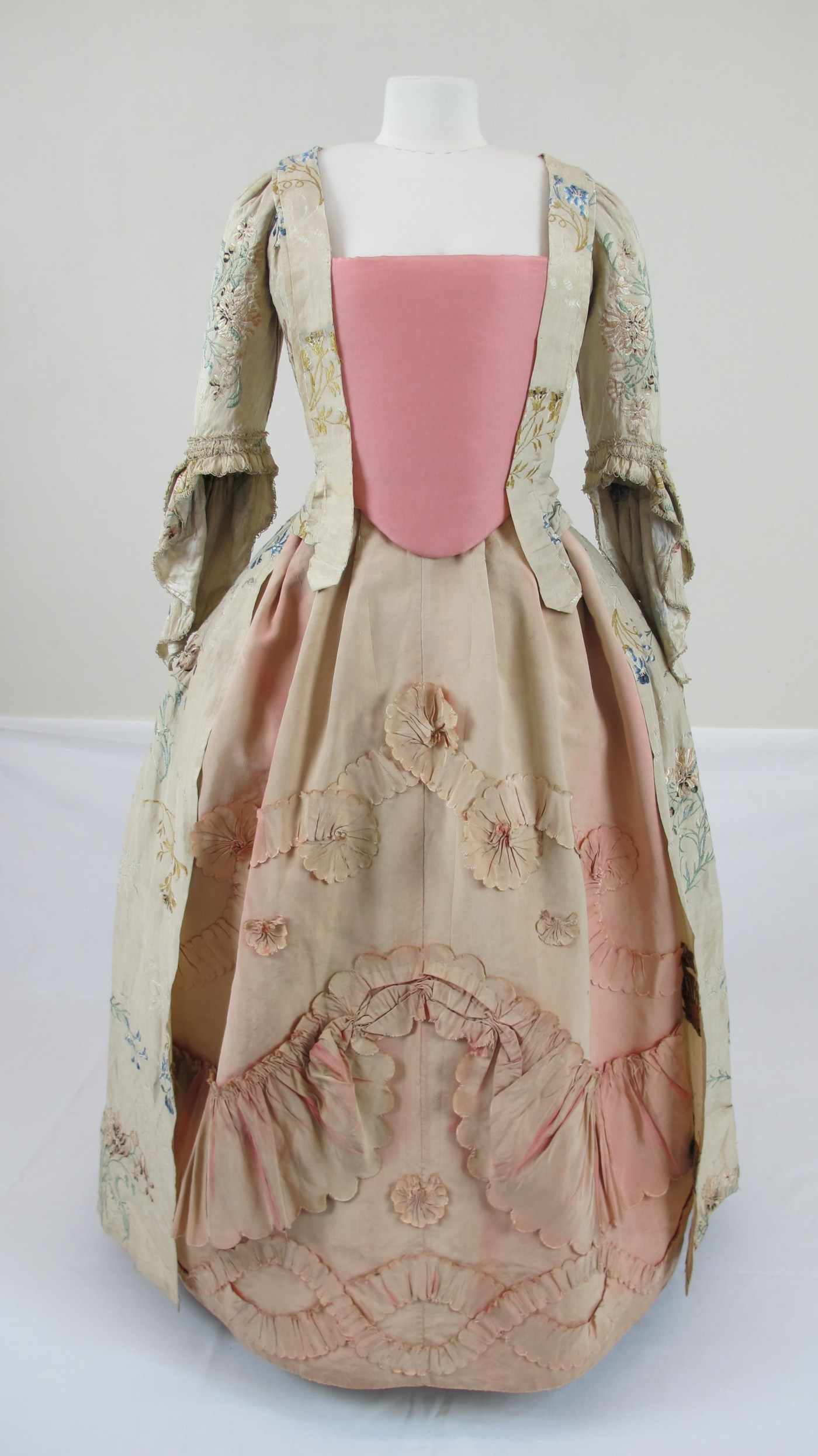
The 2018 Elizabeth Hammond Conservation Grant was awarded to the Museum of Edinburgh for the conservation and exhibition of Mrs Nimmo’s Dress, a rare 18th century costume and underskirt.
In 2018, The Costume Society UK generously pledged their support, alongside the Friends of Museums and Galleries Edinburgh and Museums and Galleries Edinburgh, for the conservation of the finest 18th century dress (robe and skirt) in our collection. The dress had been in our collection for many decades, and was of interest to researchers, dressmakers and the general public, but it had been identified during a conservation assessment as being unsuitable for display. It was extremely fragile, and it was clear that any attempt to mount it would put additional strain on the tears in the silk.
The conservator identified as the best person to work on this exciting project was Tuula Pardoe of the Scottish Conservation Studio (based at Hopetoun House in Dalmeny). After some unavoidable delays, the work was finally able to be carried out, with a completion date of April 2020. Tuula drew up a conservation plan which was approved by the curator (Vicky Garrington) and management team. We were able to visit the conservation studio as work progressed, which allowed us to see the work in detail, and to explore the dye colour options for the replica stomacher made by Tuula to make the dress more suitable for display.
Tuula obtained a conservation-grade mannequin on which to mount the dress, and has provided detailed instructions for the storage and display of the robe and skirt from now on. Tuula has also provided an extensive conservation report, from which we have extracted some highlights below.
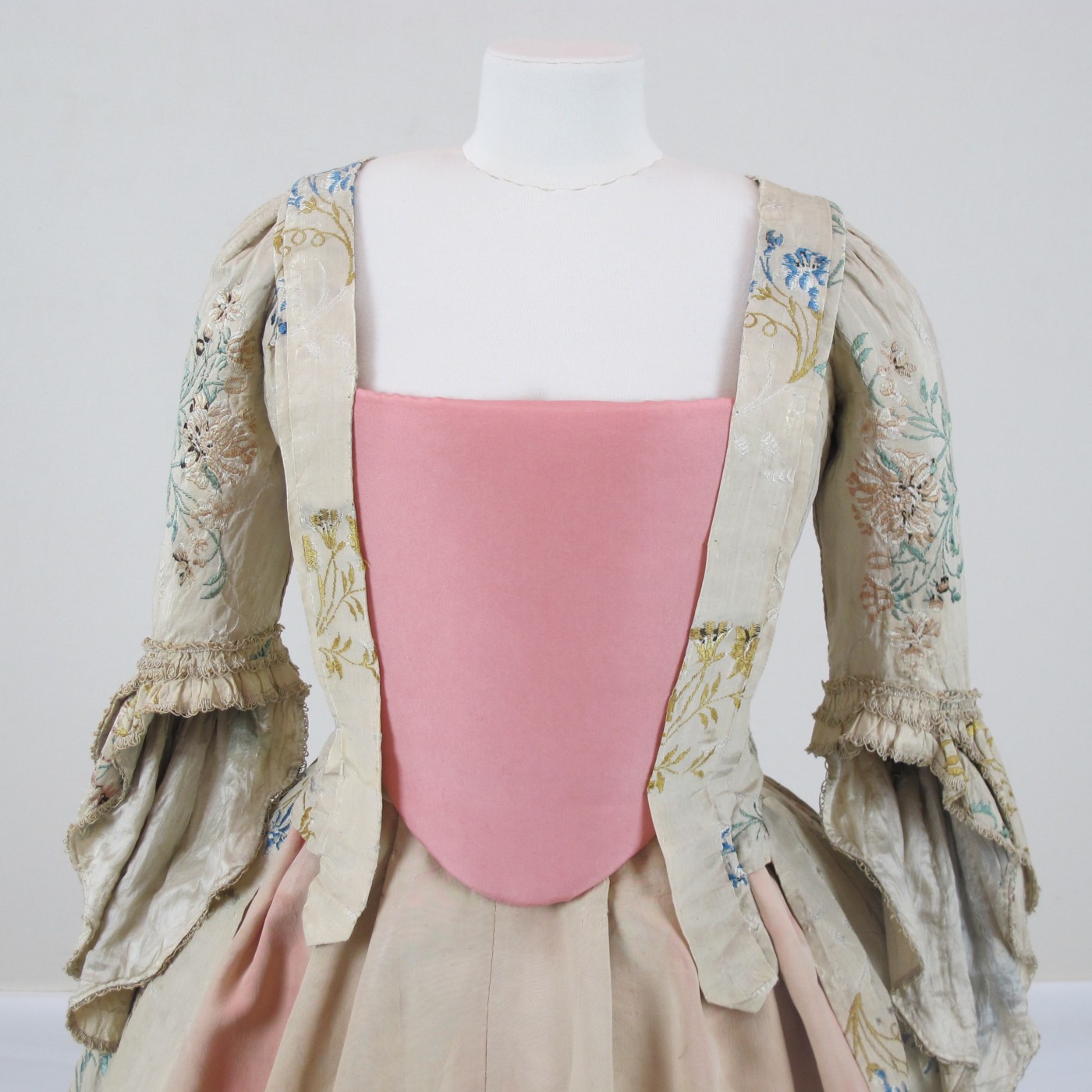
Museums and Galleries Edinburgh is very grateful to the Costume Society UK for their support, without which this important conservation project simply would not have been possible. We look forward to sharing the dress with the public once we are able to re-schedule our exhibitions at the Museum of Edinburgh. We will update you on this as work progresses. The conserved dress, mounted by Tuula Pardoe, including a replica stomacher. The colour of the stomacher was chosen as a compromise between the faded pink of the exposed areas of the skirt, and the shockingly bright pink hidden in the folds. It was interesting to discuss this aesthetic choice with Tuula. We hope you agree that the chosen colour enables the viewer to get a sense of a coherent outfit.
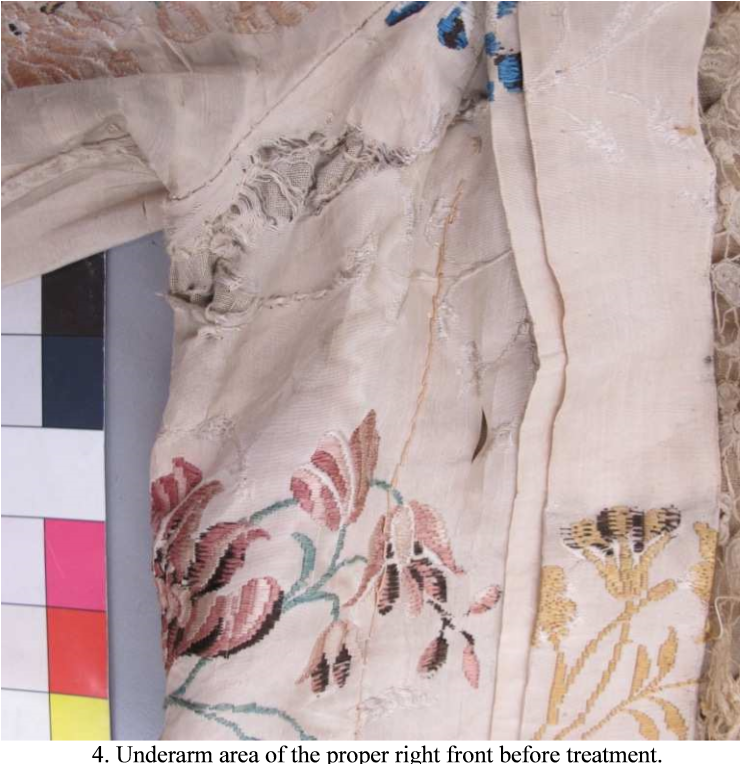
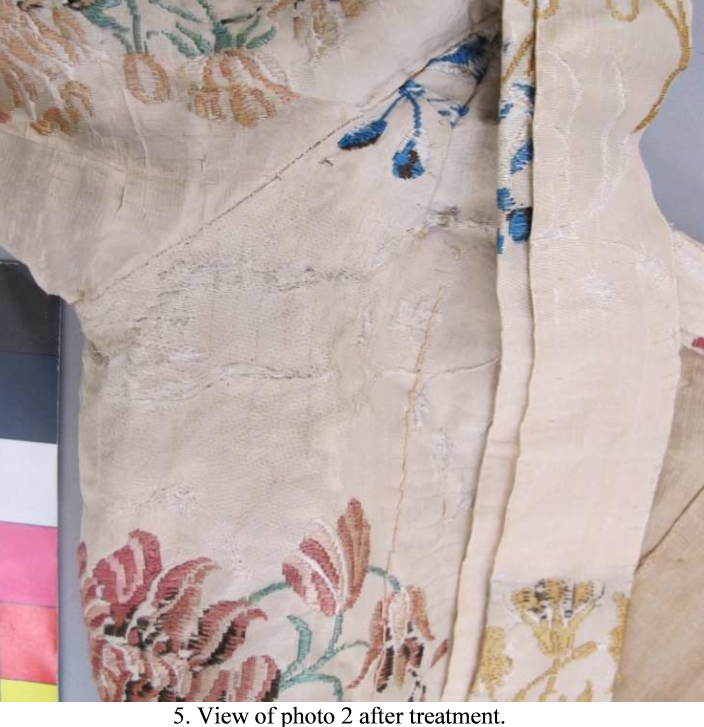
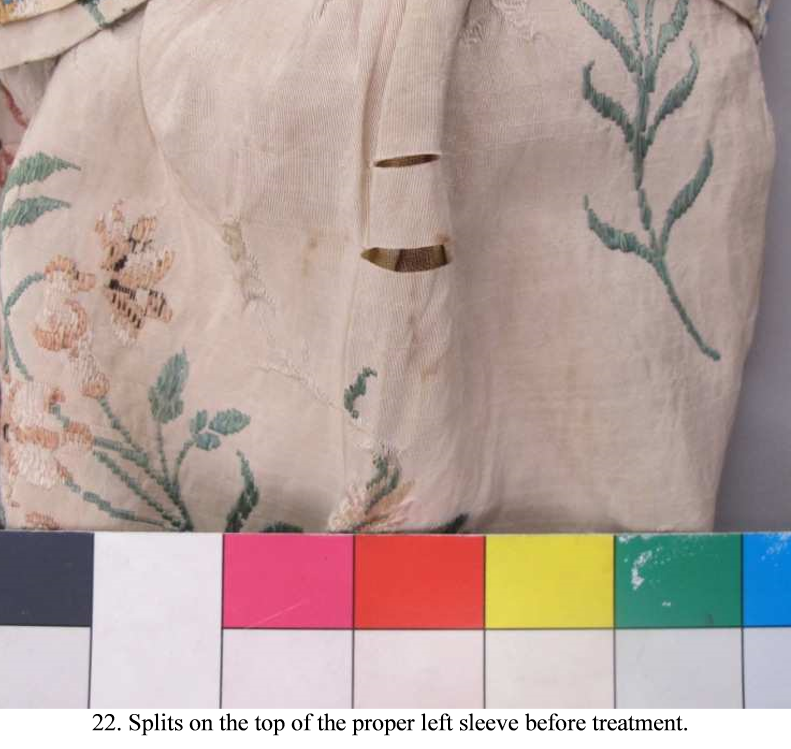
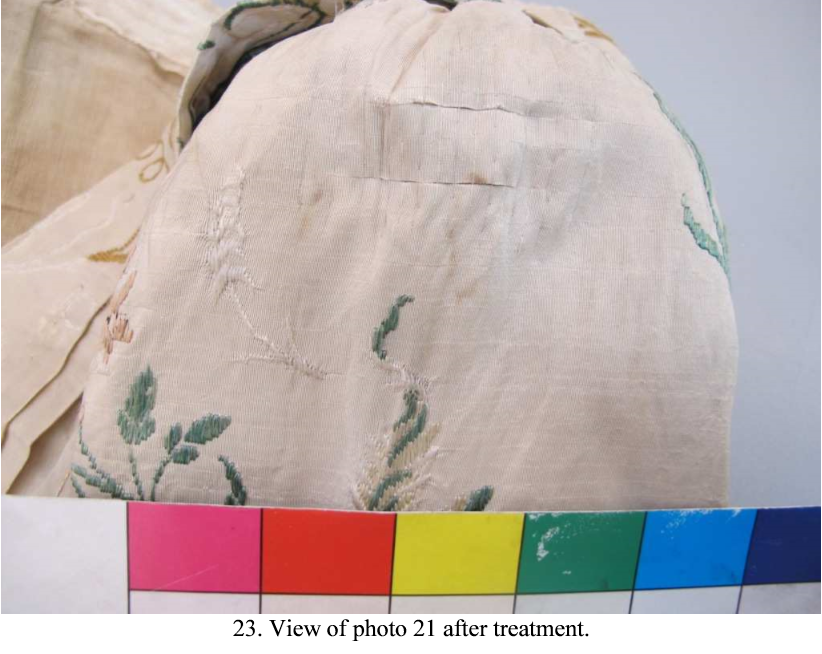
Images on this page, give a sense of the state of disrepair of the robe before treatment. Light exposure and other factors had led to tears in the silk in areas of tension such as underarms, which would be difficult to protect from further damage during display. The same underarm area is shown after treatment and shows how the silk has been stabilised and protected from further damage. ‘Restoration’ was not the aim here. Instead, the aim was supporting the garment to prevent further damage and to make it strong enough to withstand display on a mannequin. Splits on the tops of the sleeves of the bodices before treatment are clearly shown above. Post-treatment, the same shoulder area is now stable, without covering up the fact that tears have occurred. Also shown in the images. As well as structural benefits, the treatment means that the viewer’s eye is not drawn directly to damage, while at the same time, the history of the wear and tear of the garment during its life is visible.
Image gallery